
What to do the night before an exam
In short: Confirm the time, room and permitted aids, then pack. Do one short round of recall and stop at a set time. Go to bed at roughly your normal hour.
The night before an exam has a particular mood. You are too wound up to relax and too tired to learn anything big, and every chapter you skipped suddenly looks like the one that will be on the paper. A short, boring plan helps more than a heroic one.
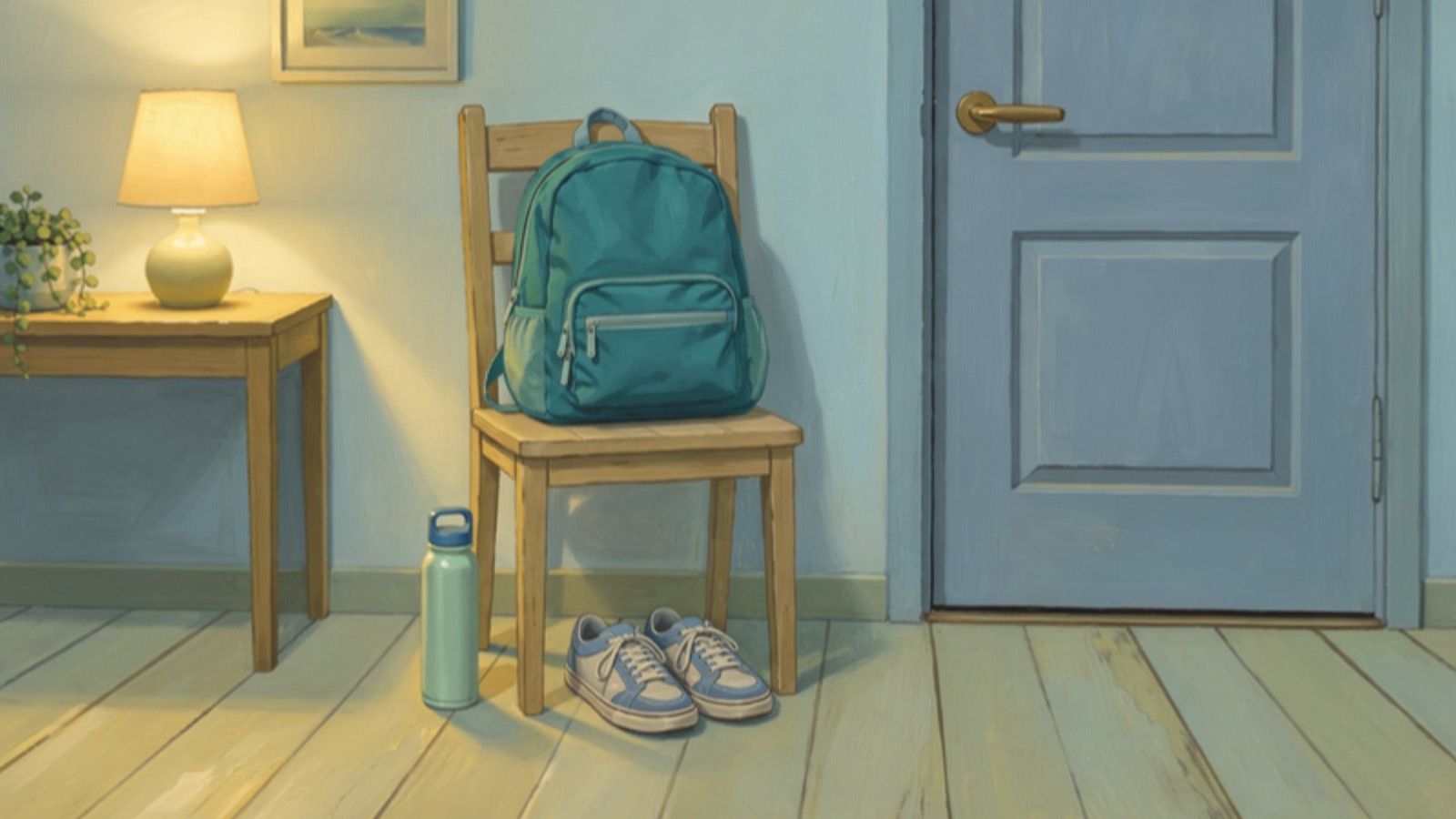
Think of this evening as getting ready, with a little revision on the side. The heavy lifting happened in the weeks before, or it did not, and one long night will not rewrite that. What you can still do is arrive rested, on time, with the right things in your bag and a clear head about where to start.
Check the practical things first
Start with the details that can ruin a morning. Open the exam notice or your course page and confirm the date, the start time, the room and what you are allowed to bring. Rules about calculators, dictionaries and notes differ between courses, so read the one for this exam instead of trusting your memory of the last one.
Then pack. It takes ten minutes tonight and saves a small panic tomorrow, when you would otherwise be hunting for a charger with one shoe on.
- Student card or other ID
- Two pens, a pencil and an eraser
- Permitted aids, with fresh batteries or a full charge
- Water and a quiet snack, if they are allowed
- Your route, with some spare time for a late bus
Do one light round of recall
Give revision a fixed window, perhaps an hour or two, and decide when it ends before you begin. Pick the topics that matter most and try to explain each one from memory, on paper or out loud. Check what you missed, fix it and move on. If this way of working is new to you, our guide to testing yourself before you feel ready shows how it goes.
Leave the brand new chapter alone unless it is small and central. Opening a large unfamiliar topic at nine in the evening mostly teaches you that it is large and unfamiliar. Your time is better spent making sure the things you nearly know are within reach, ideally from your own notes and not a stranger's forty page summary.
The one page rule: write the formulas, dates or arguments you want fresh on a single sheet. When the sheet is full, revision is over.
Close the evening on purpose
Pick a stopping time and treat it like an appointment. Put the books in the bag, set two alarms and do something ordinary, such as making food, taking a shower or walking around the block. Group chats can be muted until tomorrow. Someone is always revising a topic you have never heard of, and reading about it at midnight rarely helps.
Go to bed at roughly your normal hour. Trying to fall asleep three hours early often turns into three hours of staring at the ceiling. If your head keeps rehearsing, write the worry or the question on a piece of paper and promise to look at it at breakfast. And if you are still awake after a while, getting up to read something dull for a bit is fine.
Leave the morning almost empty
Eat what you usually eat, look at your single page if it calms you, and leave early. Outside the exam room you will meet people comparing answers to questions nobody has asked yet. You are allowed to stand somewhere else.
When the paper arrives, read all of it once, note the marks for each question and start with one you can handle. A steady first answer does a lot for the second. Afterwards, whatever happened, write down what you would change next time and use it for your two-week revision plan, so the next night before is a quieter one.
Try it tonight: Open the exam notice, check the start time and room, and put your ID and pens in your bag before you revise anything.
Common questions
Should I stay up late to revise?
We would not. Pick a stopping time and go to bed at roughly your normal hour, so you arrive with a clear head.
What if I have not covered everything?
Choose the topics that matter most and the ones you nearly know. A large new chapter late in the evening rarely repays the time.
What should I do if I cannot sleep?
Write the worry down and look at it at breakfast. If you are still awake after a while, get up and read something dull for a bit. If sleep problems keep coming back, talk to a health professional.